
Leave a Comment
Your email address will not be published. Required fields are marked *

Developing a medical journal from scratch in a resource-constrained setting is not a straightforward journey. Rather, it is a series of small decisions, setbacks, and achievements that gradually add up to something bigger. For us, the Janaki Medical College Journal of Medical Sciences (JMCJMS) is more than simply a journal; it is an important part of our academic journey. Satyam Prakash joined JMCJMS as Managing Editor not long after the journal had established itself, and over the years, he progressed to become Executive Editor. P. Ravi Shankar has been associated with the journal as an editor for more than a decade, having been involved with it since its beginning.
An institutional Journal with a Global Ambition
JMCJMS was established in 2013 at Janaki Medical College, Janakpurdham, Nepal. The city is located in the southern plains near the India border. During the early planning discussions, PRS raised a simple yet profound question: "Will the journal run, and more importantly, will it sustain?". Establishing a journal was one challenge sustaining and developing it was an entirely different one.
In retrospect, that question became more than a concern, and it became a guiding principle. Today, as the journal continues to publish regularly and steadily strengthen its academic standing, that question has been answered through more than a decade of perseverance, collaboration, and sustained commitment to scholarly excellence.
Much of the progress during the journal's formative years was made possible through the leadership of Prof. Dr. Kshitiz Upadhyay Dhungel, who assumed the primary responsibility for establishing and developing JMCJMS, working alongside a committed team. The contributions of national and international editors, reviewers, editorial board members, authors, and all other contributors have been invaluable for the journal’s growth.
More than a decade later after initiation, JMCJMS represents a story of persistence rather than perfection. From the beginning, its mission was clear, to provide researchers at a regional medical college in Nepal with a credible, ethical, and rigorous platform for scholarly publication. In July 2026, JMCJMS has grown from a modest institutional journal into one with a global community of authors, reviewers, and readers, demonstrating that lasting academic credibility is built on consistency, integrity, and sustained commitment.
From Biannual to Triannual: Charting the Journal's Growth
During the initial years, JMCJMS published two issues annually. Since 2022, the journal is being published three times a year in January–April, May–August, and September–December. Expanding from two to three issues each year required substantially more high-quality manuscripts, a larger and more committed pool of peer reviewers, and the ability to manage editorial and production workflows more frequently without a proportional increase in resources.
The transition was driven by a steady increase in manuscript submissions as JMCJMS gained recognition within Nepal's medical and academic community, coupled with Janaki Medical College's growing commitment to strengthening its own scholarly publishing platform. Through greaterpublication frequency, the journal intends to accommodate rising research output, reduce publication delays, and provide authors with quickerpublication of their work.
Building Legitimacy
JMCJMS has evolved alongside the global transformation in scholarly publishing. In keeping with these developments, JMCJMS follows an immediate open-access policy on publication, expanded to a triannual publication schedule in 2022, and is supported by an international editorial board representing several countries.
JMCJMS has grown from an institutional journal into a trusted platform for biomedical research in Nepal and abroad. By combining strong national recognition with internationally accepted editorial and ethical standards, the journal continues to strengthen its role in advancing high-quality medical research and scholarly communication.
Global Minds, Shared Vision: The International Strength of JMCJMS
Behind today's globally connected editorial board lies a story of persistence, gradual growth, and strategic expansion. The journal has gradually expanded its editorial board by inviting distinguished academics from Nepal and abroad. Today, the journal's editorial board includes academicians and researchers from Nepal, India, Malaysia, Pakistan, the United Kingdom, Sri Lanka, USA, and Mauritius. This diversity strengthens editorial quality, enhances credibility, and broadens the journal's global reach. JMCJMS has overcome local barriers by transforming them into an opportunity through building global collaborations.
The Learning Curve Behind Editorial Leadership
Running an academic journal may seem straightforward from the outside, but years of editorial experience reveal a far more demanding reality, one shaped by continuous learning, operational challenges, and gradual growth. My journey (SP) began under the guidance of experienced editors, learning publication ethics and the process of publishing and running a journal. Every manuscript handled and every issue published became another step in the learning process.
The experience taught me (SP) that competence is not acquired overnight and is developed through observation, persistence, mistakes, and continuous improvement. I (PRS) have grown as an editor and a reviewer during my tenure at the journal. We believe long-term success is achieved not through dramatic breakthroughs, but through consistency, thoughtful decisions, and unwavering commitment to the task.
Behind the Scenes: The Challenge of Peer Review Readers see a published paper as a finished, polished thing. Peer review is an important part of the quality assurance process for academic publications. Peer review may often also be a challenge. Peer review looks nothing like the clean, orderly process described in author guidelines. The single hardest part has always been finding people willing to review.
For regional journals, finding suitable peer reviewers is more difficult because the pool of qualified subject experts is often limited. Reviewers may consider the indexing, the quartile and the impact factor of a journal when deciding whether to accept an invitation. Most reviewers contribute their time and expertise voluntarily, without financial compensation, while balancing demanding academic, clinical, and research responsibilities. Experts may be reluctant to devote time to reviewing manuscripts without payment.Editors must continually recruit, motivate, train and retain dedicated reviewers while ensuring timely and high-quality evaluations. JMCJMS does not charge authors for publishing their articles and provides support and guidance free of cost. As a free to publish journal JMCJMS can only provide a certificate of appreciation to reviewers and editors.
Consequently, editors often need to invite multiple reviewers before securing at least two willing experts. Academic institutions, funding agencies, and regulatory bodies should formally recognize and appropriately incentivize the contributions of reviewers and editors as an essential component of academic scholarship.
The Quiet Shift from Print to Digital: Technology Alone Is Not Enough
While the journal uses the NepJOL online management system, the real challenge has never been the technology itself—it has been ensuring that editors, reviewers, and authors are adequately trained to use it effectively. A digital platform can streamline manuscript handling. But some individuals may face challenges handling technology.
The move away from print has provided greater accessibility and efficiency, yet we feel something may have been lost along the way. Printed issues offered a tangible sense of permanence and institutional identity that digital platforms cannot fully replace. There is a pleasurable sensory aspect to handling a printed journal. For JMCJMS, the future lies not in choosing between print and digital, but the journal must strengthen digital workflows while preserving the values that made print meaningful.
Looking Ahead: Toward Quarterly Publication and Broader Indexing
The next step is to move from triannual to quarterly publication—four issues a year instead of three. Publishing four times a year will require a steady increase in quality submissions, a larger and more engaged reviewer pool, and sustained institutional support.
Yet publishing regularly is only part of the journey. For a regional medical journal, achieving international indexing is often the greater challenge. Inclusion in databases such as PubMed/MEDLINE, Scopus, and DOAJ enhances a journal's visibility, credibility, and global reach. For JMCJMS, this remains an important goal shared by many emerging journals in Nepal and other low- and middle-income countries.Although JMCJMS is indexed in NepJOL, it has not yet reached major international databases.
These challenges are not unique to Nepal and are shared by many other developing nations. Progress therefore requires more than regular publication—it demands continued investment in editorial quality. Strengthening these areas will not only improve the prospects for indexing but also enhance the long-term quality, visibility, and impact of regional medical journals.
Lessons for Emerging Regional Journals
Regional journals serve a purpose that extends beyond publication alone. Their success not only strengthens individual institutions but also the broader national and global research ecosystem. The journey of JMCJMS has reinforced an important lesson: building a credible medical journal is a marathon, not a sprint.
Looking back, our years with JMCJMS have been among the most rewarding experiences of our academic career. Over the years, we developed a deep emotional connection with JMCJMS. Although much remains to be achieved, we look toward the future with hope and confidence. We believe JMCJMS will continue to grow in quality, visibility, and international recognition. Wherever our own journey leads, a part of us will always remain connected to JMCJMS, and we will always take pride in being a part of its continuing growth story.
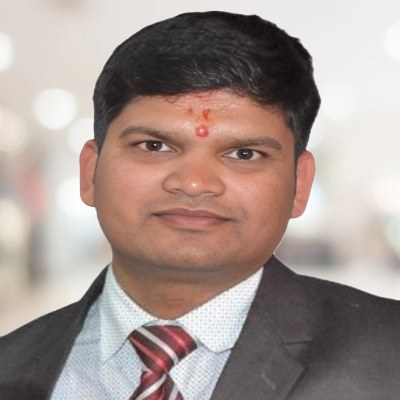
Associate Professor in Biochemistry at Tribhuvan University, Janaki Medical College, Janakpurdham, Nepal with over 14 years of experience in medical education, research, and academic leadership. Currently serving as Executive Editor of Janaki Medical College Journal of medical Sciences (JMCJMS), an accomplished researcher, editor, and reviewer with numerous peer-reviewed publications. Passionate about teaching biochemistry and mentoring future healthcare professionals, and is committed to advancing scientific research, academic excellence, and evidence-based education through collaborative leadership.
View All Posts by Satyam Prakash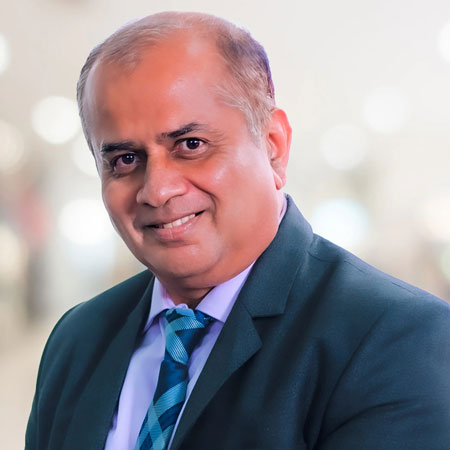
Dr P Ravi Shankar is the Programme Director for the Health Professions Education Open and Distance Learning Programmes at IMU University's Centre for Education, Kuala Lumpur, Malaysia. He holds an MBBS and MD (Pharmacology), is a PSGFAIMER Fellow in Health Professions Education, and a Fellow of the Academy of Medical Educators. He is a member of the World Association of Medical Editors and of the ORCID Research Advisory Council. With over 835 refereed journal publications and career researcher status (top 2% globally for the last five years), his work spans curriculum development, assessment design, faculty development, and educational research. His interests include health humanities, pharmacovigilance, antimicrobial stewardship, and health professions education equity, with extensive experience across Nepal, the Caribbean, and Malaysia. He is a founding editor of the Janaki Medical College Journal of Medical Sciences, Nepal.
View All Posts by Pathiyil Ravi ShankarThe views and opinions expressed in this article are those of the author(s) and do not necessarily reflect the official policy or position of their affiliated institutions, the Asian Council of Science Editors (ACSE), or the Editor’s Café editorial team.

Scholarly publishing is founded on collaboration, frequently accompanied by tension between authors and publishers. While the...
Read more ⟶
Every editor dreams of seeing their journal indexed in internationally recognized databases such as Web of Science and Scop...
Read more ⟶
In many areas of modern science, a quiet shift has transformed the editorial desk. For decades, the primary objective of peer...
Read more ⟶