
Leave a Comment
Your email address will not be published. Required fields are marked *
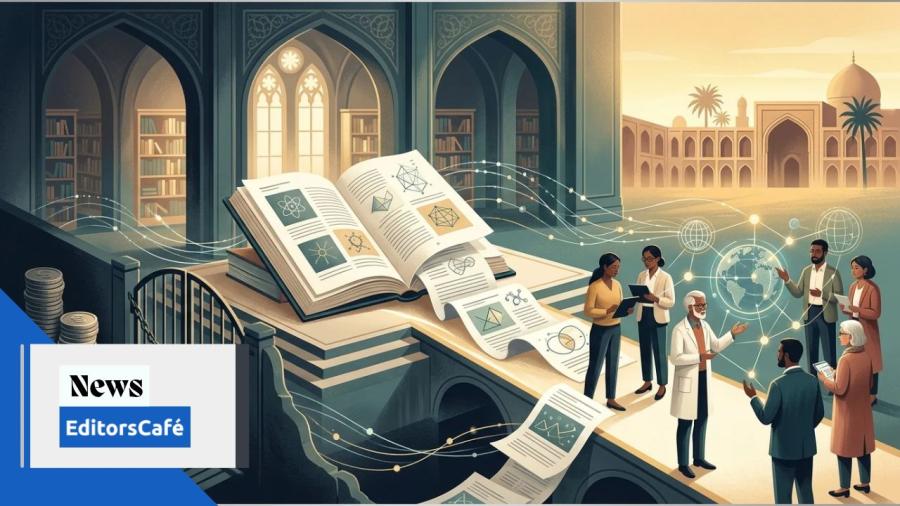
Open access has widened readers’ access to research, but it has also changed who pays. In many models, the cost has moved from libraries and readers to authors and their institutions through article processing charges (APCs). That shift can create a new barrier: a researcher may be able to read the literature yet be unable to pay to publish in it.
In many Open Access publishing models, financial responsibility has shifted from readers and libraries to authors and their institutions through Article Processing Charges (APCs). Although these charges can support publishing services, they may create another barrier: a researcher may be able to read the literature yet be unable to pay to publish in it.
The UNESCO Recommendation on Open Science identifies equity, fairness, diversity, inclusion, and collective benefit as important principles for making science more accessible and participatory. Genuine openness should therefore address not only access to existing research but also researchers’ opportunities to contribute to the global body of knowledge.
APC-based publishing can be manageable when universities, research funders, or other institutions cover publication costs. The difficulty arises where they do not. Researchers at institutions with limited budgets may struggle to pay, even when their work meets scientific standards and addresses relevant questions.
This is not an argument against open access itself, and it does not mean that every researcher in a low-resource setting faces the same problem. Circumstances differ by institution, discipline and country. The concern is narrower. When authors are expected to carry a substantial share of publishing costs, opportunities to publish may depend partly on institutional wealth rather than on scholarly merit alone. Waivers can help individual authors, but they rely on case-by-case approval and leave the underlying funding model unchanged. A fair system has to address barriers to publishing as well as barriers to reading.
This creates a paradox: researchers may conduct valuable studies and prepare manuscripts that meet scientific standards but remain unable to publish because funding is unavailable.
The problem is not Open Access itself, but the assumption that authors should bear a substantial share of its costs. A fair scholarly communication system must address barriers to both reading and publishing research.
Diamond open access is one alternative. Journals charge neither authors nor readers. Instead, publishing is supported by universities, research institutions, scholarly societies, governments, consortia, or other organizations.
This model does not eliminate publishing costs. Peer review, editorial management, copyediting, digital platforms, metadata, and long-term preservation all require resources. The difference lies in how these services are funded and governed.
Diamond Open Access can make scholarly publishing more inclusive, provided that journals have sustainable financial support, professional editorial practices, reliable infrastructure, and transparent quality standards. It should not be understood as simply publishing for free, but as organizing and funding scholarly communication in a different way.
If diamond journals depend on institutional support, the next question is what that support should look like. Four areas deserve attention.
Finally, free publication alone is not enough. Reliable metadata, digital preservation, transparent editorial policies, rigorous peer review, and appropriate indexing are essential to journal credibility and discoverability. Removing financial barriers must go hand in hand with maintaining scientific and editorial standards.
These issues are particularly relevant to Iraq and other countries across the Global South, where research institutions may face financial and infrastructural constraints while addressing important national and regional challenges.
The response should go beyond securing individual APC waivers. Although waivers can help individual researchers, a more sustainable approach is to develop national and regional publishing systems that reduce dependence on author-paid models.
Data from theDirectory of Open Access Journals (DOAJ) offer a starting point. A DOAJ analysis published in April 2025 listed 156 Iraqi journals in the directory, 32 of which followed the Diamond model. Only Egypt had more DOAJ-indexed journals in the Middle East and North Africa. The figures show that no-fee publishing already exists within Iraq’s research ecosystem.
They also show the limits of the example. Those 32 journals are about one in five of the Iraqi titles in the directory, compared with 37 percent across the region as a whole [3]. The data count journals; they say nothing about quality, editorial capacity or financial stability, and DOAJ lists only journals that have applied for inclusion. Expanding the model therefore requires investment in editorial expertise, digital infrastructure, preservation, international visibility and research integrity.
However, the existence of these journals does not by itself establish their long-term sustainability or editorial quality. Expanding the model requires investment in editorial expertise, digital infrastructure, preservation, international visibility, and research integrity. Public and institutional support should prioritize quality, transparency, and sustainability rather than simply increasing the number of journals.
For Iraq, strengthening reputable institutional and national journals could help locally relevant research reach both national and international audiences. It could also support wider participation by researchers whose institutions have limited resources for publication fees.
Equitable publishing does not require choosing between commercial publishing and unsupported academic journals. A diverse ecosystem can include institutional publishing, public funding, community-owned platforms, repositories, and Diamond Open Access.
Governments, universities, libraries, scholarly societies, funders, publishers, and researchers all have a role in sustaining this ecosystem. Their efforts should support appropriate funding, shared infrastructure, professional editorial development, and recognition of diverse forms of scholarly contribution.
UNESCO’s report on its global consultation on Diamond open access point the same way. Drawing on nearly 2,900 survey responses from 90 countries the importance of equity, inclusion, sustainable infrastructure, appropriate funding, and stronger recognition of this publishing model. These priorities are relevant not only to journals operating without author fees but also to the wider development of fair and resilient scholarly communication.
The objective should be a publishing system that combines financial accessibility with rigorous peer review, transparency, research integrity, and professional editorial practices.
· Open Access should address barriers to both reading and publishing research.
· Article Processing Charges can disadvantage researchers whose institutions have limited funding.
· Diamond Open Access removes publication fees for both authors and readers.
· Sustainable institutional and public investment is essential for equitable scholarly publishing.
· Iraq can strengthen its scholarly publishing ecosystem through reliable infrastructure, rigorous editorial standards, and greater international visibility.
Merged with the Key Takeaways content into two paragraphs (see G). They now state that diamond open access is “one promising route, not a complete answer” and cover the Global South point.
Diamond Open Access offers a promising pathway towards greater equity, provided it is supported by sustainable funding, strong institutions, reliable infrastructure, and responsible editorial practices.
Science should serve as a global public good. Opportunities to contribute to scientific knowledge should not depend primarily on geography, institutional wealth, or the ability to pay publication fees.
A truly open scholarly ecosystem must therefore make knowledge accessible to everyone while enabling researchers from diverse backgrounds to participate fairly in its creation and dissemination.
Experienced Researcher with a demonstrated history of working in the research industry. Skilled in Nonprofit Organizations, Analytical Skills, Microsoft Word, Life Sciences, and Data Analysis. Strong research professional with a Master's degree focused in Animal Sciences from The University of Queensland and Strong education professional with a Ph.D. focused in Anima science/poultry Nutrition. Editorial Board Member-Journal of Fisheries and Livestock Production. Member of The Asian Council of Science Editors.
View All Posts by Sami Hammed FarhanThe views and opinions expressed in this article are those of the author(s) and do not necessarily reflect the official policy or position of their affiliated institutions, the Asian Council of Science Editors (ACSE), or the Editor’s Café editorial team.


Scholarly publishing is under pressure from several directions at once: the economics of open access, strained peer review, f...
Read more ⟶
The email that came back perfect Consider a hypothetical scenario. Amina, a public-health researcher in Lagos,...
Read more ⟶
Open access (OA) publishing is often presented as a way to make scholarly knowledge more widely available. But for researcher...
Read more ⟶