Leave a Comment
Your email address will not be published. Required fields are marked *
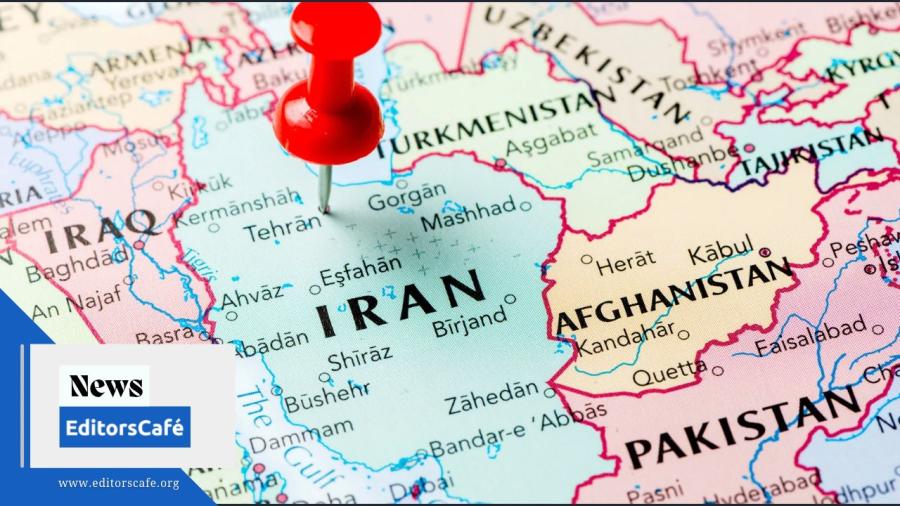
Open access (OA) publishing is often presented as a way to make scholarly knowledge more widely available. But for researchers working under sanctions, openness can come with barriers of its own. In Iran, the cost of publishing, restricted access to digital infrastructure, and limitations on international research connections can shape how researchers publish, collaborate, and make their work visible.
This opinion piece is not a complaint. It is a field report from the trenches of a research ecosystem that has learned resilience out of necessity, and it draws on over a decade of my own experienceacross regulatory science, nanobiotechnology, hygiene, functional foods, and public health in Iran.
Iran has a large and active research community relative to its population size. According to the SCImago 2024 ranking, Iran holds the 17th position globally and ranks second among Islamic countries, with 75,501 documents. However, this ranking represents a decline from 15th place in previous years, a drop attributed directly to sanctions, economic restrictions, and limitations on publishing papers by Iranian scholars.
In 2022, Iran published over 78,000 documents in Scopus; by 2023, this number had declined to 74,000. While the trend has since shown some recovery, it has not yet reached pre-sanction levels.The Iranian government has set an ambitious target to elevate the country’s scientific production ranking from 17th to 12th by 2027, a goal that will require not only Increasingoutput but also overcomingthe structural barriers that currently constrain international visibility.
In theory, open access was designed to democratize knowledge. In practice, for Iranian researchers, it has created a new form of exclusion.
Many reputable OA journals require article processing charges (APCs), often between $1,000 and $5,000 per article.For researchers in Iran, currency devaluation, inflation, and limited research budgets can make these charges difficult to meet. In my experience, funding bodies rarely cover APCs, while university research budgets may be insufficient or restricted by sanctions.
While some publishers offer fee waivers or discounts to researchers from low-income countries, Iran is frequently excluded because it is classified as an upper-middle-income country. This classification, which does not account for the real economic constraints imposed by sanctions, places Iranian researchers in a paradoxical position: too wealthy for waivers, too sanctioned to pay.
One study found that approximately $4.9 million was spent on publishing 3,506 OA articles by Iranian researchers, an average of $1,397 per article. These costs have become a significant obstacle to publishing in APC-based OA journals. As a faculty member at the University of Tehran observed, “The economic situation has negatively affected the publication of Iranian articles in prestigious journals and their citation”. She further noted that “many open access journals that have higher citations are not free, and universities around the world usually allocate funds for publishing in such journals, but we do not have such an option”.
International sanctions, while primarily aimed at government institutions, indirectly constrain the academic environment in Iran in profound ways. Access to essential digital tools, scholarly platforms, and OA publishing services is frequently limited. Some international publishers refuse to process manuscripts from authors affiliated with specific Iranian institutions. Financial restrictions complicate payments for APCs, conference registration fees, and subscriptions to hybrid journals.
Beyond the financial barriers, sanctions disrupt routine access to scientific infrastructure, including software platforms, cloud services, and collaborative research tools. Many platforms block Iranian IP ranges or provide reduced functionality, affecting day-to-day research activities. Even when research is published openly, scholars often face difficulties accessing global indexing services, citation management systems, and OA-support technologies.
Some scholars have described this form of digital exclusion as “identity-based segregation,” arguing that broad jurisdictional restrictions can affect access to scientific tools based on users’ location.Tech companies impose blanket jurisdictional blocks to bypass regulatory complexities, effectively undermining the right to science for millions of users. Simple acts, such as pulling a standard code library from GitHub, querying AI assistants for literature reviews, or accessing cloud-based tools, are blocked not by domestic firewalls but by foreign servers detecting an Iranian IP.
Despite these formidable barriers, Iranian researchers have developed creative strategies to maintain international visibility. Collectively, these barriers create an uneven playing field, forcing Iranian researchers to exert significantly greater effort to achieve visibility and participate in international scholarly networks.
One notable innovation is the development of the Digital Object Recognizer (DOR) , a national alternative to DOI that has emerged as a local response to restricted access to international infrastructure. Iranian journals, many of which are university-affiliated, have adopted open access models more rapidly than many Western counterparts, motivated partly by efforts to improve international rankings and partly by longstanding cultural values emphasizing the diffusion of knowledge. A significant portion of Iranian academic output is freely available online through institutional repositories or locally maintained journals that do not charge authors APCs.
Institutional repositories and academic social networks have also provided alternative routes for sharing research. Repositories can make preprints and post-prints accessible, while platforms such as ResearchGate and Academia.edu can help researchers share papers directly with interested readers when traditional access routes are limited.
South-South scientific collaboration has also emerged as a vital pathway. Organizations such as COMSATS and TWAS promote scientific cooperation among developing countries, including Iran, Pakistan, Turkey, and Kazakhstan. The SESAME synchrotron light source, the only facility of its kind in West Asia, gives scientists from Cyprus, India, Egypt, Iran, Jordan, Pakistan, Palestine, and Turkey access to cutting-edge facilities that drive discoveries across multiple disciplines.
Iranian academics and researchers are striving to overcome these challenges by seeking collaborations with international colleagues. These correspondences not only provide valuable resources but also enable the building of networks of scholars with similar research interests. However, these collaborations come with difficulties, including limitations on international partnerships, conferences, and academic forums, limitations that hinder the exchange of ideas and feedback from diverse perspectives, which are crucial for academic growth.
In my own work at the Deputy of Food and Drug under Guilan University of Medical Sciences and the Research Center of the Iranian Food and Drug Administration (IFDA), I have witnessed how regulatory mandates can generate internationally relevant research.
Our comprehensive risk assessments of toxic elements, such as arsenic, lead, and cadmium, in medicinal plants and irrigation water in northern Iran have not only contributed to national policy but have also been published in international venues.
Our ongoing project on smoked rice investigates the formation of polycyclic aromatic hydrocarbons (PAHs) during the traditional sooting process and evaluates novel nanoadsorbents for their removal. This research directly addresses a public health concern that has been neglected for decades while contributing to the global literature on food safety. We also developed ways to continue functional-food research independently when access to external resources was limited
Similarly, our work on some local natural extractions using green methods has opened collaborations with researchers in Pakistan and Kazakhstan. These collaborations also showed the value of using regional expertise and resources to strengthen research capacity.
Our investigations into chitosan-based polymer scaffolds loaded with plant secondary metabolites for wound healing, supported by the Guilan Science and Technology Park, demonstrate how local scientific ingenuity can produce cutting-edge, application-oriented science despite resource constraints.
These experiences suggest that research visibility is not only a matter of publishing in prestigious journals. It also depends on showing how locally generated evidence addresses scientific and public-health questions that matter beyond national borders.Heavy metals, PAHs, antimicrobial resistance, and nanotoxicology are universal concerns. When research is positioned within these global narratives, geographical origin becomes less of a liability and more of a unique vantage point.
Finally, never underestimate the power of local policy impact. Research that influences national regulations, such as work on heavy metals in medicinal plants or PAHs in smoked rice, provides a story that resonates beyond citations. It demonstrates that science matters in the real world, which is ultimately what makes a compelling contribution to any scholarly platform.
Sanctions have severely restricted access to premium analytical instruments and international training workshops. But they have also fostered a culture of resourcefulness.
In our laboratories, we maintain older HPLC and GC-MS systems with locally manufactured spare parts. Maintaining these systems requires not only technical knowledge but also institutional knowledge about repair, adaptation, and resource management. We have established a peer-training culture where senior researchers teach younger colleagues not only how to run instruments but how to interpret data critically and write manuscripts that meet international editorial standards. As a lecturer at Ghadir Non-Governmental University and Payame Noor University, I have integrated these practical survival skills into my biochemistry and nutrition courses.
Editorial and review activities have also been a two-way street. Serving as a peer reviewer for Wiley and De Gruyter, and as an editorial board member for several international journals, I have gained insider knowledge of what editors truly value: novelty, methodological rigour, and clear policy implications. This knowledge is passed on to colleagues and students, demystifying the publication process and reducing the gap between manuscript submission and acceptance.
Based on my experience, I offer the following practical recommendations for researchers operating under similar constraints:
Build alternative dissemination routes.
Institutional repositories and other legitimate sharing mechanisms can help researchers maintain access and visibility when conventional publishing routes are difficult to use.
Treat collaboration as research infrastructure.
Regional and international collaborations can provide access to expertise, facilities, data, and opportunities that may not be available locally.
Connect local research to global questions.
Research gains wider relevance when findings from local problems are presented in ways that clearly show their implications for broader scientific or public-health challenges.
I do not know when the sanctions will end, or when Iran will be fully reintegrated into the global open access ecosystem. But I know that waiting is not an option. The Iranian scientific community has already demonstrated resilience, creativity, and a remarkable capacity for collaboration.
Open access is celebrated for democratizing knowledge, yet high publication fees and digital exclusion reinforce inequalities for academics in sanctioned or economically pressured nations. The path forward lies in deepening South-South partnerships, leveraging every available digital tool, and producing research so clearly valuable that it demands attention regardless of its origin.

Researcher and Lecturer in Biochemistry-Physiology-Medicinal plants-Cancer and Clinical medicine
View All Posts by Ebrahim Alinia-AhandaniThe views and opinions expressed in this article are those of the author(s) and do not necessarily reflect the official policy or position of their affiliated institutions, the Asian Council of Science Editors (ACSE), or the Editor’s Café editorial team.

Introduction Research integrity means conducting research with honesty, clarity, accountability, and ethical respo...
Read more ⟶
In many regional scholarly publishing communities, one question is repeatedly raised by editors, authors, and institutional l...
Read more ⟶
Graduate students taking courses on applied data analytics and process mining often work with industrial datasets that cont...
Read more ⟶